


Position Title
Professor and Chair
Education
- B.A., Sociology (minor in English and Psychology), University of Western Ontario
- M.A., Journalism, University of Western Ontario
- M.A., Sociology, UC Santa Barbara
- Ph.D., Sociology (emphasis in Gender Studies), UC Santa Barbara
About
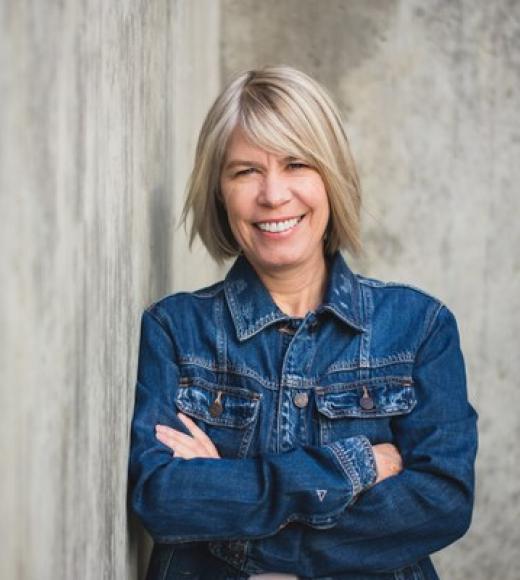
Laura Grindstaff is Professor and Chair of Sociology at UC Davis, where she is also affiliated with Cultural Studies, Performance Studies, and the Designated Emphasis in Feminist Theory and Research. Her research and teaching focus on American media and popular culture in intersection with gender, race, and class inequality. She has authored or co-authored papers in Social Problems, Annual Review of Sociology, Annals of the American Academy of Political and Social Science, American Journal of Cultural Sociology, Text & Performance Quarterly, and Cultural Critique, among other journals. Her ethnographic studies of media include the award-winning The Money Shot: Trash, Class, and the Making of TV Talk Shows (University of Chicago Press) and a series of essays on the production of "ordinary celebrity" in contemporary reality programming. Grindstaff has also published widely on the topic of gender, sport, and cheerleading, focusing primarily on competitive coed college cheer. She is co-editor of three edited volumes: the first (2010) and second (2019) editions of the Handbook of Cultural Sociology (Routledge), and, more recently, Uprooting Bias in the Academy: Lessons from the Field (Springer).
Research Focus
American popular culture • film, media, and television • feminist theory * gender and performativity • race, class, and culture • ethnography • qualitative methods.
Publications
BOOKS
Bisson, Linda, Laura Grindstaff, Lisceth Brazil-Cruz, and Sophie Barbu, eds. (2022). Uprooting Bias in the Academy: Lessons from the Field. Springer. Open access at https://doi.org/10.1007/978-3-030-85668-7
Grindstaff, Laura., Ming-Cheng Lo, and John Hall, eds. (2019) Handbook of Cultural Sociology, 2nd Edition. Routledge International Handbook Series. London / New York: Routledge.
Grindstaff, Laura (2002) The Money Shot: Trash, Class, and the Making of TV Talk Shows. Chicago: University of Chicago Press.
ARTICLES
Grindstaff, Laura and Rafi Grosglik (2022). “Agon and Apron: Hybridizing Gender by “Sportifying” Cooking in MasterChef USA.” American Journal of Cultural Sociology 10: 620-656
Grindstaff, Laura, Yvette Flores, and Lisceth Brazil-Cruz (2022). “ADVANCE-ing Grounded Theory: Methodological Insights from a Qualitative Study of Latinas in STEM,” ADVANCE Journal 3 (1). Open access at https://doi.org/10.5399/osu/ADVJRNL.3.1.8.
Grindstaff, Laura and Gabriella Torres-Valencia (2021). “The Filtered Self: Selfies as Gendered Media Production.” Information, Communication, & Society 24 (5): 733-750.
Grindstaff, Laura and Susan Murray (2015) "Reality celebrity: Branded affect and the emotion economy." Public Culture 27 (1), special issue on celebrity and publics in the Internet era.
Grindstaff, Laura and Emily West (2011) "Hegemonic masculinity on the sidelines of sport." Sociology Compass 1-23.
Grindstaff, Laura and Emily West (2010) "Hands on hips, smiles on lips! Gender, race, and the performance of 'spirit' in cheerleading." Text & Performance Quarterly 30 (2): 143-162.
Grindstaff, Laura and Emily West (2006) "Cheerleading and the gendered politics of sport." Social Problems 54 (4): 500-518.
Grindstaff, Laura and JosephTurow (2006) "Video cultures: Television sociology in the 'new TV' age," Annual Review of Sociology 32: 103-125.
Grindstaff, Laura (2001) "A Pygmalian Tale Retold: Remaking La Femme Nikita." Camera Obscura 47, Vol. 16, No. 2: 132-175.
Grindstaff, Laura and Martha McCaughey (1998) "Feminism, Psychoanalysis, and (Male) Hysteria over John Bobbitt's Missing Manhood." Men and Masculinities 1 (2): 173-192
Grindstaff, Laura (1994) "Double Exposure, Double Erasure: On the Frontline with Anita Hill." Cultural Critique 27: 29-60.
Teaching
At the graduate level, Laura Grindstaff teaches Cultural Sociology, Field Methods, and various special topics courses on intersectionality, the gender binary, and feminist theory and methods. At the undergraduate level, she teaches American Popular Culture, Gender, Cultural Sociology, and special topics courses on social media.