The study, "Health Security for All? Racial Discourse in Presidential Health Speeches from Roosevelt to Biden" examines the prevalence and nature of racial discourse in 90 years of presidential health speeches, from Roosevelt to Biden, addressing, in particular, a debate about whether racial discourse rose or fell after the Civil Rights Era.
The article, "I don’t want them investigating shit and taking my kids”: Controlling Images and Chicanas’ Decarceral Motherwork in Police Encounters" analyses the idealogical discourses that shape Latina mothers’ carceral encounters and the maternal strategies they employ to protect their children from carceral state intervention and violence.
The first cross-disciplinary and in-depth account of critical ocean studies, the Routledge Handbook of Critical Ocean Studies brings together perspectives from the humanities, social sciences, arts, and other ways of knowing to identify key insights from the diverse and dynamic field of critical ocean studies.
The article, "Shaping research in marine functional connectivity for integrated and effective marine science and management" clarifies definitions and subcategories of connectivity, and proposes a unified conceptual framework for Marine Functional Connectivity (MFC) research to support multidisciplinary marine science for improved management and policy.
The study, "Navigating Ethnic Identity at a Time of Crisis: A mixed-methods study of Jewish identity in California after October 7, 2023" captures the social psychological challenges and changes that took place within the Jewish American community during this tumultuous time.
The article, "Measuring the spacial scale of structural racism and discrimination: Consequences for estimated life expectancy" can be read in full here.
Professor Ming-Cheng Lo has a forthcoming article in the American Journal of Cultural Sociology about the potential of and threats to democracy in Taiwan.
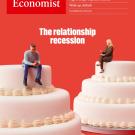
The Economist cited Professor Xiaoling Shu in their cover story on "Generation Single" in the November 8, 2025 issue. The full article can be read here.
Professor David Kyle was interviewed by Washington Post (12/24/24) in the article, “Texas puts up billboards warning of rape, kidnapping to deter migrants."
Prof. David Kyle’s pioneering research on Cognitive Migration was featured in the UC Davis Letters & Science Magazine article, "How We Imagine Who We Will Be in a New Place,” and can be read in full here.
Assistant Professor Ariana Valle co-authored an article with Nicholas Vargas (UC Berkeley) and Stephanie Dhuman (Hamilton College), which has been published in Annual Review of Sociology as a review in advance.